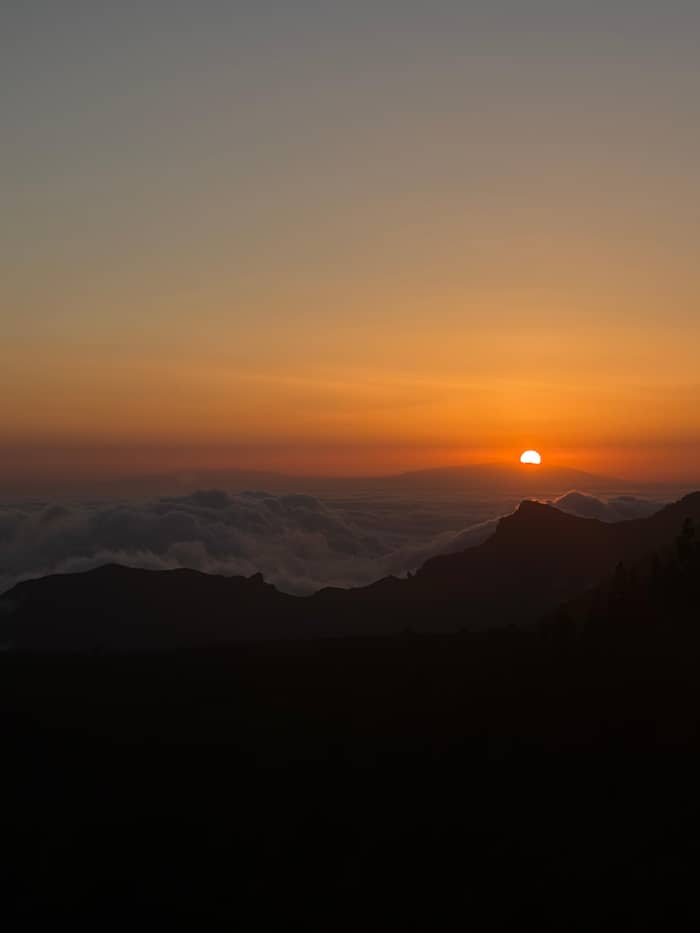
Warmest layers
The winter kit
November to March
See the sunset tourTick-off checklist
To-do list · 9 items
Tick off each point as you complete it. This device keeps your progress.
0 / 9 ready
Everything is ready. Pick your evening on Teide, and the rest is settled.
Book your seatThe high plain is far colder than the beach you left. Mountain-top temperatures for each month, how fast the evening cools, and a layer-by-layer list of what to bring.
Editorial team, teidesunset.top · Updated November 23, 2026 · 8 min reading time
Facts at a glance
Anyone who asks whether it is cold on Mount Teide is probably comparing it with a beach resort, and the gap between the coast and the plain is the whole story. The tourism board puts the coast at spring-like temperatures averaging 23 °C in winter, while the peaks of Las Cañadas are topped with a thick layer of snow.3 The park authority adds that the weather in the national park is more changeable than on the coast, even when the rest of Tenerife is enjoying a sunny, warm day.2
For a sunset visit the numbers matter most after the sun has gone. The park's official advice is layers, with a warm garment in the bag in every season, summer included.6 On the summit side, the tourism board repeats the point: mountain clothing and footwear are recommended, with protection against sudden changes in temperature, and the summit stays cold in summer too.1 A sunset on the plain is not the summit, but the principle carries over.
This page is about the practical side of that gap: what the weather record says for each month, how quickly an evening cools, and which clothes make the difference between enjoying the light and counting the minutes until the bus. The list at the top is the short version, and the table and chart below hold the figures behind it.
Month by month
| Month | Daily high | Daily low | Layers to add |
|---|---|---|---|
| January | 8.2 °C4 | 1.6 °C4 | Insulated jacket, hat, gloves |
| February | 8.2 °C4 | 1.3 °C4 | Insulated jacket, hat, gloves |
| March | 10.2 °C4 | 2.7 °C4 | Warm jacket and a scarf |
| April | 12.4 °C4 | 4 °C4 | Warm jacket and a scarf |
| May | 15.1 °C4 | 6.5 °C4 | Fleece and windproof shell |
| June | 19 °C4 | 10.2 °C4 | Fleece and windproof shell |
| July | 22.9 °C4 | 14.1 °C4 | Light fleece and shell |
| August | 22.6 °C4 | 14 °C4 | Light fleece and shell |
| September | 18.7 °C4 | 10.7 °C4 | Fleece and windproof shell |
| October | 14.6 °C4 | 7.3 °C4 | Warm jacket and a scarf |
| November | 10.9 °C4 | 4.3 °C4 | Insulated jacket and a hat |
| December | 9.1 °C4 | 2.6 °C4 | Insulated jacket, hat, gloves |
NOAA averages for 1991 to 2020 from the Izana station; the layers column is advice, not data.4
The climate in Tenerife is not a single climate. The park authority defines the climate of Teide National Park as continental subalpine, very different from the low and middle areas of the island.7 Nearly the whole park sits above 2,000 m, beyond the reach of the trade wind humidity in every season, with wide temperature swings, strong winds and bright sun.8 Those are the conditions in which you will watch the sunset.
The tourism board's park guidance gives a sense of scale: at around 2,000 m the yearly mean sits between 10 and 11 degrees C, summer days reach 20 to 25 degrees and winter hovers near 0 in the higher areas.9 The nearest weather station in the record, Izana, stands at 2,371 m and 11.6 km from the viewpoints, which makes it a fair guide to the height of the plain, but a poor guide to anything at sea level.4
The north and south sides of the island add a second layer. The tourism board says the north is exposed to the trade winds and that from an altitude of 600 to 1,500 m the air gets cooler, and above that it gets drier, with some snowfall in winter and temperatures fluctuating significantly from daytime to night-time.10 Teide sits above all of it. Whatever the coast is doing, plan the plain as a separate place.
The mountain top by month
Displayed: sun-free hours in mid-month, and days with a minimum of 2.5 mm of precipitation. NOAA, station Izana, at 2,371 m on the Teide side of Tenerife (11.6 km away), 1991 to 2020.4
The Izana station gives the average daily high and low for each month, measured over 1991 to 2020. In January the average high is 8.2 °C and the low 1.6 °C, and in February the high is also 8.2 °C with a low of 1.3 °C.4,4 March reaches 10.2 °C and 2.7 °C, April 12.4 °C and 4 °C.4,4 These are the months that ask for the warmest clothing.
In summer the record is gentler. July averages a daily high of 22.9 °C and a low of 14.1 °C, and August 22.6 °C and 14 °C.4,4 By September the high is 18.7 °C and the low 10.7 °C, and by October 14.6 °C and 7.3 °C.4,4 November brings 10.9 °C and 4.3 °C, and December 9.1 °C and 2.6 °C.4,4 The table that follows lines them up beside the layers to add.
Snow belongs to the cold months, with the park authority counting about 10 snowy days a year, chiefly in January and February and less in March and December.11 Even a mild winter day can end wintry on the plain, and the operator can postpone or refund when conditions are poor. Look at the forecast for the day, and read the averages as a sketch of the season, not a promise.
Pick your kit
Choose your situation and see what to put in the bag.
If I visit between November and March
Pack the warmest kit
Izana averages a daily low of 1.6 °C in January, and snow falls about 10 days a year.4,11
If I visit in July or August
Still bring a fleece
Summer does not change the summit, which stays cold, and the park advises a warm garment in every season.1,6
If I feel the wind easily
Add a windproof shell
At higher altitude the winds are usually strong and gusty.12
If I burn easily
Carry sun protection
Altitude strengthens solar radiation and dry air dehydrates.13
If I am bringing a small child
Pack extra warmth
The tourism board treats altitude seriously enough to bar children under 3 from the cable car.14
Kits
Warmest layers
November to March
See the sunset tour
Flexible layers
April, May, September, October
See the sunset tour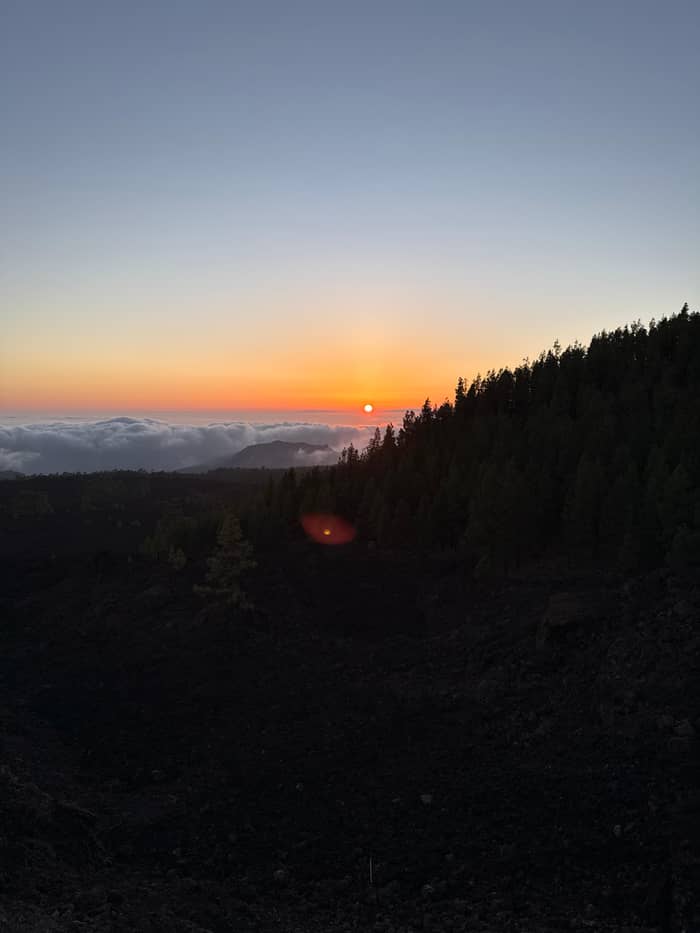
Light layers
June to August
See the sunset tourThe sunset tour picks guests up at stops in the resorts of Costa Adeje, Playa de las Americas and Los Cristianos, then drives up into the volcanic landscape. Guests step on the bus in resort clothes and step off at altitude, so what you wear on the way in is not what you need at the lookout. Whatever the departure, the listing's range of 3 to 6.5 hours means a long stretch outside once the sun has gone.
Inside the caldera the temperature range between day and night is large. The park authority says it is relatively frequent for the difference between day and night to be between 10 and 20 degrees C, according to the El Portillo garden station.5 The same text says the caldera is more or less sheltered from the wind by the walls of the amphitheater, but at higher altitude winds are usually strong and gusty.12 A windproof outer layer weighs little and cuts that wind.
Position matters as well. The authority adds that pockets inside the caldera differ: the Parador area and the base of the cable car tend to be colder, and Boca Tauce warmer.17 If you have a choice of lookout and a cold evening, the warmer side is a small comfort. The air is also dry, since relative humidity in the park stays below 50% at any time of year.18
Plan the evening
Enter your party and compare evenings with warm gear in mind.
Choose from 4 options
Enter your party and compare evenings with warm gear in mind.
≈
View≈
View≈
View≈
ViewConverted at the ECB reference rate, from-prices as listed by GetYourGuide. The precise amount is shown when you book.
The evening in order
Pickup
Guests are picked up at set stops in the south-west resorts.
The drive up
The route winds up into the volcanic landscape of the park.
Restaurant stop
Guests dine or have about 1 hour free beside a roadside restaurant.
Sunset
The group watches the sunset above the clouds, weather permitting.
After dark
The night continues at a viewing spot picked for sky and weather.
Build the outfit from the skin outward. Start with a base layer that you would wear for a day walk, then add an insulating layer such as a fleece or a light down jacket, and finish with a windproof shell. The park's advice of layers plus a warm garment in every season is the guideline for this build.6 The park is also a place where sun protection counts: the tourism board advises carrying water and sun protection because altitude strengthens solar radiation and dry air dehydrates.13
Feet and hands deserve their own thought. Proper footwear, suitable warm clothing and sun protection are the items the tourism board names for anyone climbing Teide, along with a watch for signs of altitude sickness.15 For a sunset on a roadside lookout you do not need mountain boots, but shoes with a grip help on the lava ground, and gloves and a hat are light to carry and valuable after dark. Long trousers help when you stand still.
A small bag completes the kit. The regulated descent trails of the park require sturdy mountain boots, warm clothes, a thermal blanket, water, a phone with charge and a torch for the head, which is a good model of what a cautious visitor carries even if the evening stays on the road.19 A scarf, a spare layer and a snack cost little and weigh less. The listing adds that the bus and the national park have no restrooms, so plan around the restaurant stop.
Video
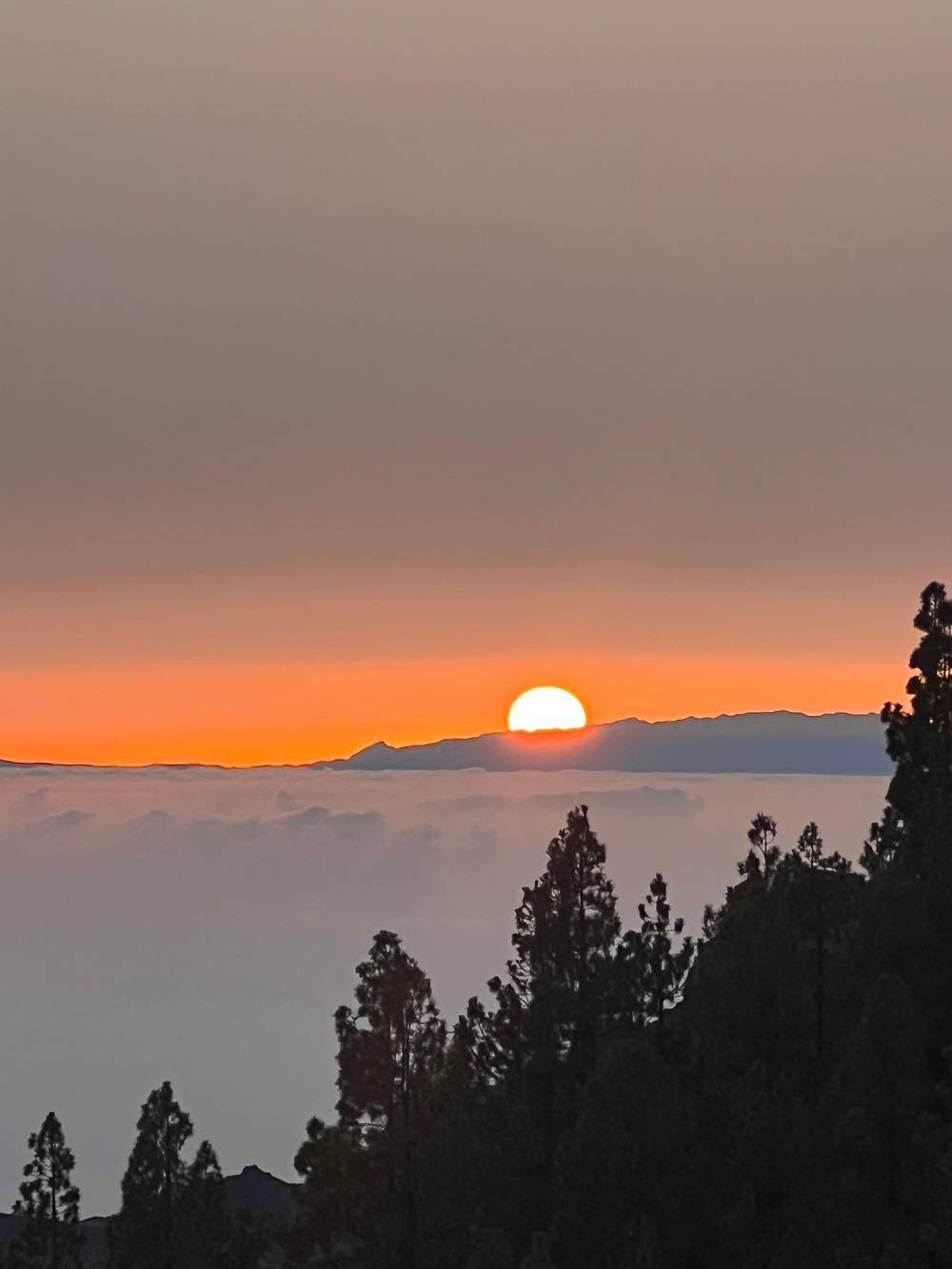
Atlantic Ambience on YouTube · Tap play to load the video; not before.
The altitude makes the weather more changeable than on the coast, even when other parts of Tenerife are enjoying a sunny, warm day.
The evening is sold on the promise of a sunset above the clouds, and the weather behind that view is well described. The tourism board explains that the blanket of cloud is made when the trade winds push cloud against the mountains of the island's north side, and that it forms at altitudes of 500 to 1,500 m.20 The park authority puts the influence between 800 and 1,600 m.21 Either way the park lies above it. The practical lesson is to dress for the plain, where the cloud is beneath you and the cold arrives with the shadow.
For a Teide sunset above the clouds, the practical effect is that the cloud sits below your feet and the air around you is dry and clear, which is a very different feeling from the damp, cloudy north of the island. The park authority says the air above the cloud layer is dry and warm.21 Its sunshine is among the highest in Spain, with an average of 7 hours of sun a day.22
The weather that cancels a sunset is cloud or rain at the lookout, not the cold. The listing says the view depends on cloud and weather, and that guests can rebook or take a full refund when conditions rule the evening out. Free cancellation up to 24 hours before the start is also offered. Dress for the plain on the day you go and let the guide decide where to stand.
The park sits high, and the tourism board advises going gradually because altitude can bring tiredness, dizziness or breathlessness.23 A sunset on the plain, at about 2,000 m, is lower than the summit, but the advice still applies if you walk the Roques de García circuit, which is rated low difficulty and measures 3.5 km.24,25 Take it slowly, drink water and stop if you feel unwell.
Families should think about the cold earlier than adults do. The tourism board keeps children under 3 off the cable car, citing the change in altitude.14 The evening tour is a bus tour on the road, so the cable car rule does not apply to it, but it is a reminder that altitude is taken seriously. Pack a warm blanket and a hat for the little ones.
Last, remember that conditions can differ from the average. The tourism board recommends checking the weather in the park before any visit and planning according to mountain conditions.26 Read the forecast on the day, work through the pack list at the top, and carry a spare layer. The evening is built to be enjoyed, and the right clothes are the cheapest way to make sure it is.
FAQ
The park advises layers and a warm garment in every season, summer included.6
Almost all of the park lies above 2,000 m, with great temperature swings and strong winds.8
Altitude strengthens solar radiation and dry air dehydrates, so carry water and sun protection.13
Poor conditions lead the operator to allow a rebooking or a refund.
Sources
Planning a sunset on Teide? Ask a real person here.